Computer vision combined with artificial intelligence plays a key role in Smart Retail. It improves operational efficiency, personalizes the customer experience, and prevents losses.
Understanding customer behavior
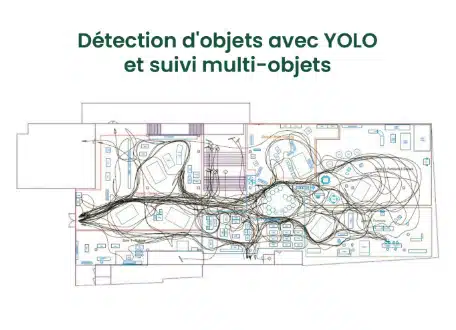
Computer vision analyzes customer movement and interactions in stores. This allows businesses to identify high-traffic areas and adjust their sales strategies.
Optimizing inventory and product management
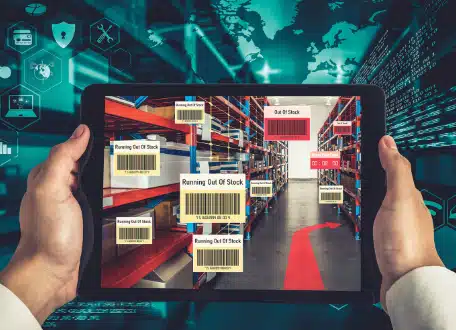
Algorithms analyze stock levels and product placement in real time. This ensures better organization and reduces stockouts.
Securing commercial spaces
Thanks to intelligent systems, theft and losses are better detected and reduced. Automated video surveillance also improves the protection of property and customers.
Personalizing the customer experience
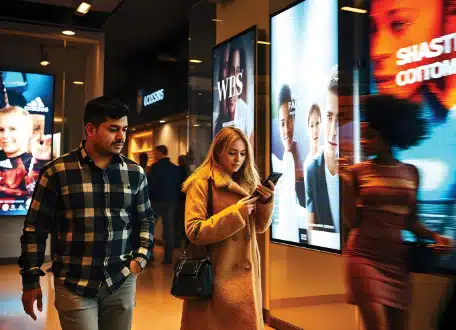
AI tools offer recommendations based on visitor preferences and profiles. Displayed ads adapt in real time to maximize impact.
Deep learning and convolutional neural networks (CNNs)
Convolutional neural networks (CNNs) are essential for computer vision. They enable image recognition using models like VGGNet and ResNet, and semantic segmentation with tools such as U-Net and Mask R-CNN.
Object recognition and tracking
Algorithms like YOLO and Faster R-CNN can identify products and customers. To track their movements, advanced techniques such as DeepSORT or ByteTrack are used.
Multimodal vision
Combining data from various sensors (RGB cameras, infrared sensors, LiDAR) increases model accuracy. This multimodal approach optimizes analyses in complex environments.
Edge computing processing
Local data processing, via devices, ensures real-time analysis. This approach reduces latency and enhances the confidentiality of the information processed.
Challenges and limitations
The challenges to overcome in order to maximize the potential of computer vision in retail
Precision and complexity
Varying environments and fluctuating lighting complicate accurate detection. Annotating the data to train the models is also a lengthy and complex process.
Privacy and regulations
Data collection raises ethical and legal concerns, particularly with regulations like the GDPR. Anonymized solutions are necessary to ensure compliance.
Cost and infrastructure
Vision technologies require expensive equipment and a powerful infrastructure. Integration with existing systems can present both financial and technical challenges.
Retail innovations: inspiring use cases
These real-world applications illustrate the enormous potential of this technology to make business processes more efficient, secure, and personalized.
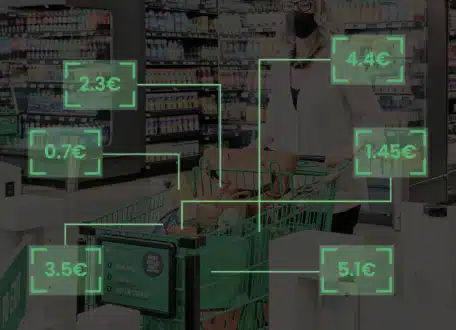
Thanks to computer vision, Amazon Go offers a cashierless shopping experience, eliminating queues and making shopping faster and smoother.
Sephora is improving the customer experience with virtual try-ons and buying behavior analysis, thereby adjusting product presentation to meet customer preferences.
Walmart uses cameras to monitor checkouts and prevent theft, while also optimizing inventory management and shelf layout.